

Krannert Art Museum presents “Imagination, Faith, and Desire: Art and Agency in European Prints, 1475–1800”
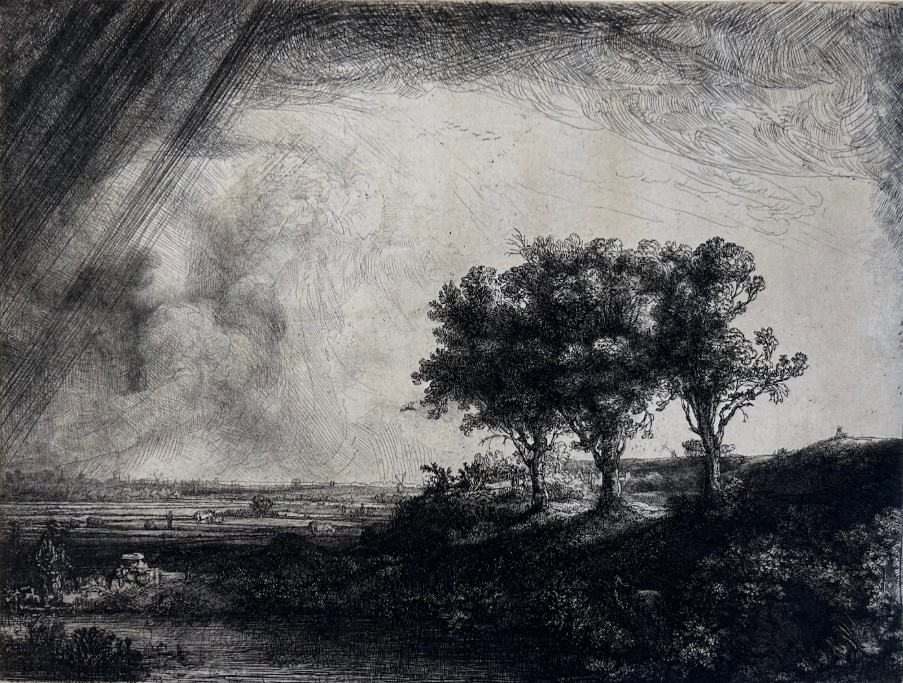
Containing over 100 prints, including works by Rembrandt, Hendrick Goltzius, and Lucas van Leyden, "Imagination, Faith, and Desire" considers the enormous impact of prints in affecting people’s intellectual paradigms, moral values, and lived reality.
The exhibition highlights Dutch contributions to printmaking and uses this art form to discuss complex societal themes. “Imagination, Faith, and Desire” is extraordinary for the significance of the works and the exceptionally high quality of the impressions, the excellence of which rivals the holdings at many major museums.
Organized thematically, “Imagination, Faith, and Desire” investigates the profound agency of early modern European prints. As Europe underwent radical societal changes, prints became a vital tool for broadcasting, disputing, and memorializing events and individuals. While incorporating beautiful objects, “Imagination, Faith, and Desire” considers the enormous impact of prints in affecting people’s intellectual paradigms, moral values, and lived reality.
Three of the six thematic sections in the exhibition focus on the arts. “No Mere Artisan” examines how prints of Adam and Eve and artists’ self-portraits conveyed not only artistic excellence but also contemporary notions about ideal bodies and gender roles.
“Artistic Imagination” considers the ways in which printmaking was a unique opportunity for artists to widely broadcast their creativity by imagining new subjects, allegories, and other graphic inventions.
“Itinerant Aesthetics” explores prints that were used to transmit artistic compositions, style, and fame across geographic and temporal borders. These so-called reproductive prints allowed their audiences to imagine paintings, drawings, and textiles located in far-flung locations.
The last three thematic sections concern peoples’ lived experience. “Inhabited World” delves into images of actual or idyllic life.
Even before the Reformation and Counter-Reformation made prints a vital means of communication, the medium was a major component of religious practice for many people. “Channeling Faith” spans the gambit from fifteenth-century devotional images to seventeenth-century virtuosic religious prints.
“Eliciting Desire” focuses on early modern ideas about sex, sexuality, and gender. The section explores topics such as same-sex desire, the dangerous allure of female sexuality, chastity, courtly love, etc.
With these six thematic sections, “Imagination, Faith, and Desire” aims to demonstrate the remarkable agency of prints in early modern Europe and how they profoundly affected people’s life and beliefs—as well as their contemporary resonances in a world still shaped by the rapid and widespread dissemination of images.
Event details
| Date |
Thu, 25 Sep - Sat, 28 Feb 2026 |
|---|---|
| Location |
Krannert Art Museum, Champaign, IL
|
| Categories |
|
Thu, 25 Sep - Sat, 28 Feb 2026
Krannert Art Museum
500 E Peabody Dr | Champaign, IL ,